BrightCheck
BrightCheck
Cedars Sinai Sponsored studio at ArtCenter College of Design
Timeline
Jan - Apr 2025
Team
Ruoyan (Crystal) Wang
Sunniva Long
Silvia Zhang
Zoe Ni
Jacey Chung
Ruoyan (Crystal) Wang
Sunniva Long
Silvia Zhang
Zoe Ni
Jacey Chung
Ruoyan (Crystal) Wang
Sunniva Long
Silvia Zhang
Zoe Ni
Jacey Chung
Ruoyan (Crystal) Wang
Sunniva Long
Silvia Zhang
Zoe Ni
Jacey Chung
Role
User research
Affinity mapping
UIUX design
Service design
System design
Tools
Figma
Chat GPT
Illustrators
Project preview
BrightCheck is a service design project that aims to eliminate cancer screening disparities in Los Angeles' Koreatown sponsored by Cedar Sinai.
My role
Research: Uncovered systemic issues of patient fear among multilingual individual, suggested systematic service design approach to subconsciously raise people’s awareness and eliminate fear.
Design: Designed a web-based immersive interactive experience for cancer screening simulation.
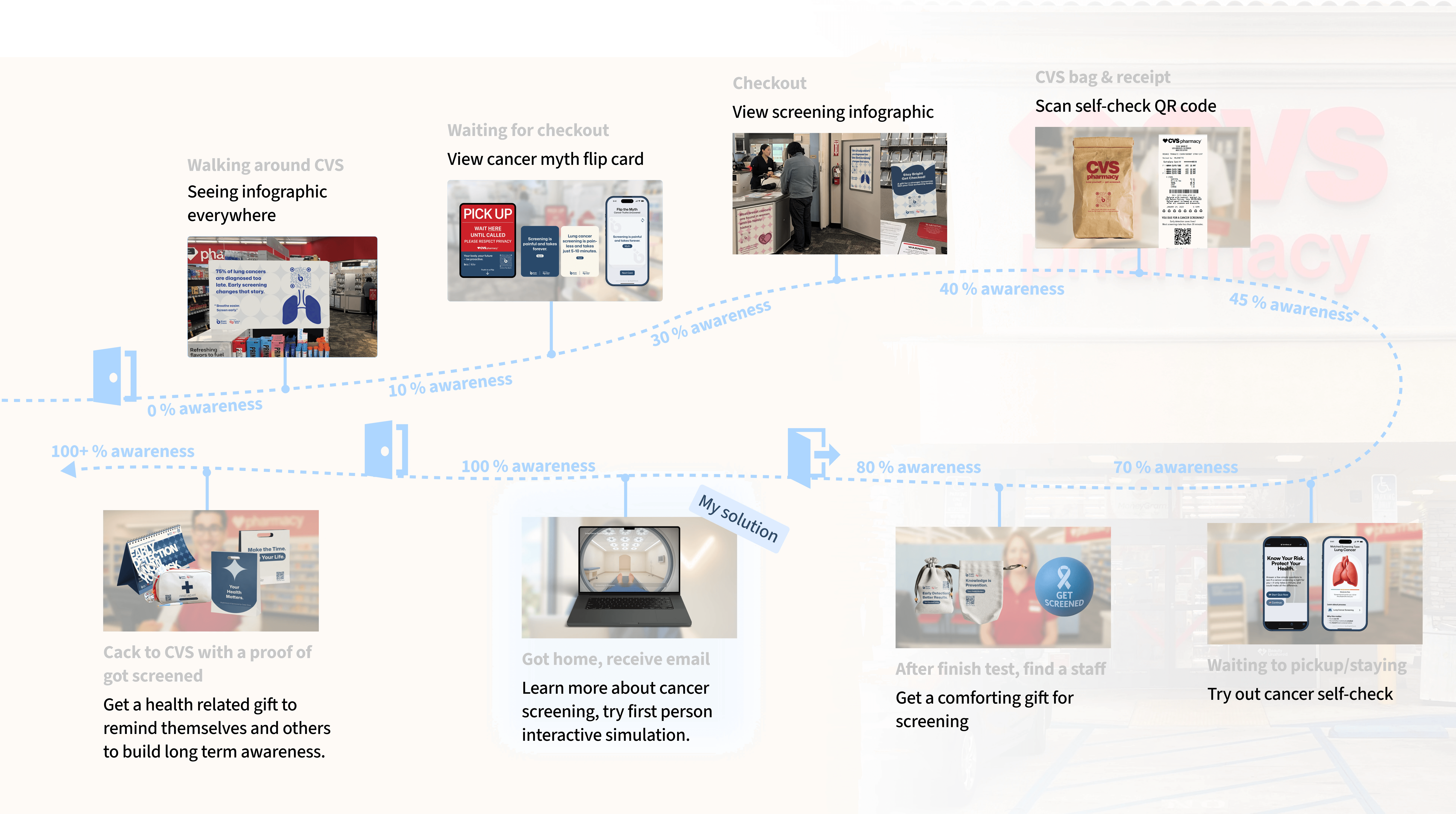
Entire service design outcome for CVS


My solution: Immersive cancer screening simulation web
This first-person simulation allows users to experience the cancer screening process from a patient’s perspective. It guides them through each step of the journey, helping them understand the procedure and reducing anxiety caused by unfamiliar medical processes.
Key problems
01
Limited access to accurate cancer knowledge among the general public.
The process relies heavily on the doctor taking the initiative to recommend and direct patients toward specific screening.
The process from initial awareness to completing screening is lengthy and time-consuming.
02
The process relies heavily on the doctor taking the initiative to recommend and direct patients toward specific screening.
03
The process from initial awareness to completing screening is lengthy and time-consuming.
Limited access to accurate cancer knowledge among the general public.
The process relies heavily on the doctor taking the initiative to recommend and direct patients toward specific screening.
The process from initial awareness to completing screening is lengthy and time-consuming.
Team: 5 mins Self-check
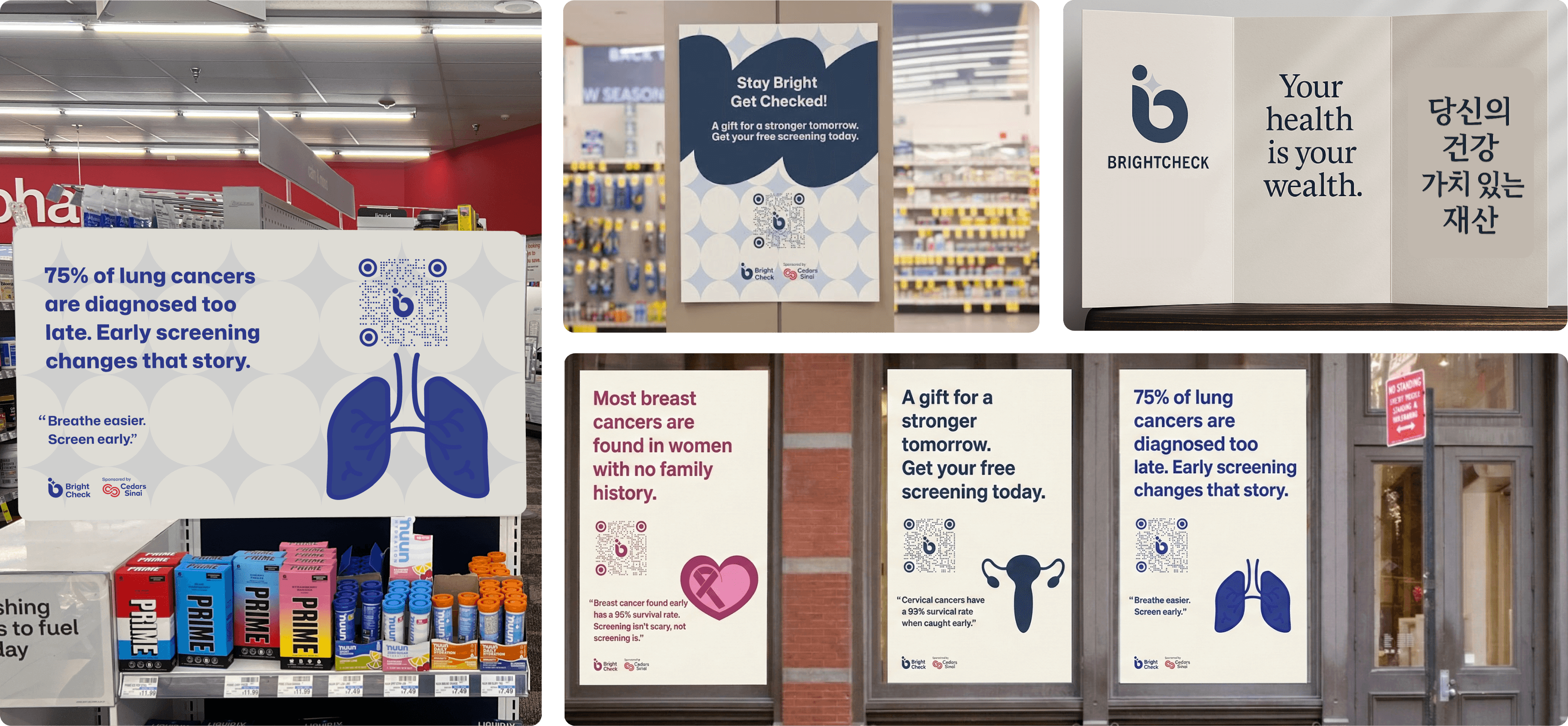
Team: Poster & infographics


Team: Flip card of cancer myth & facts


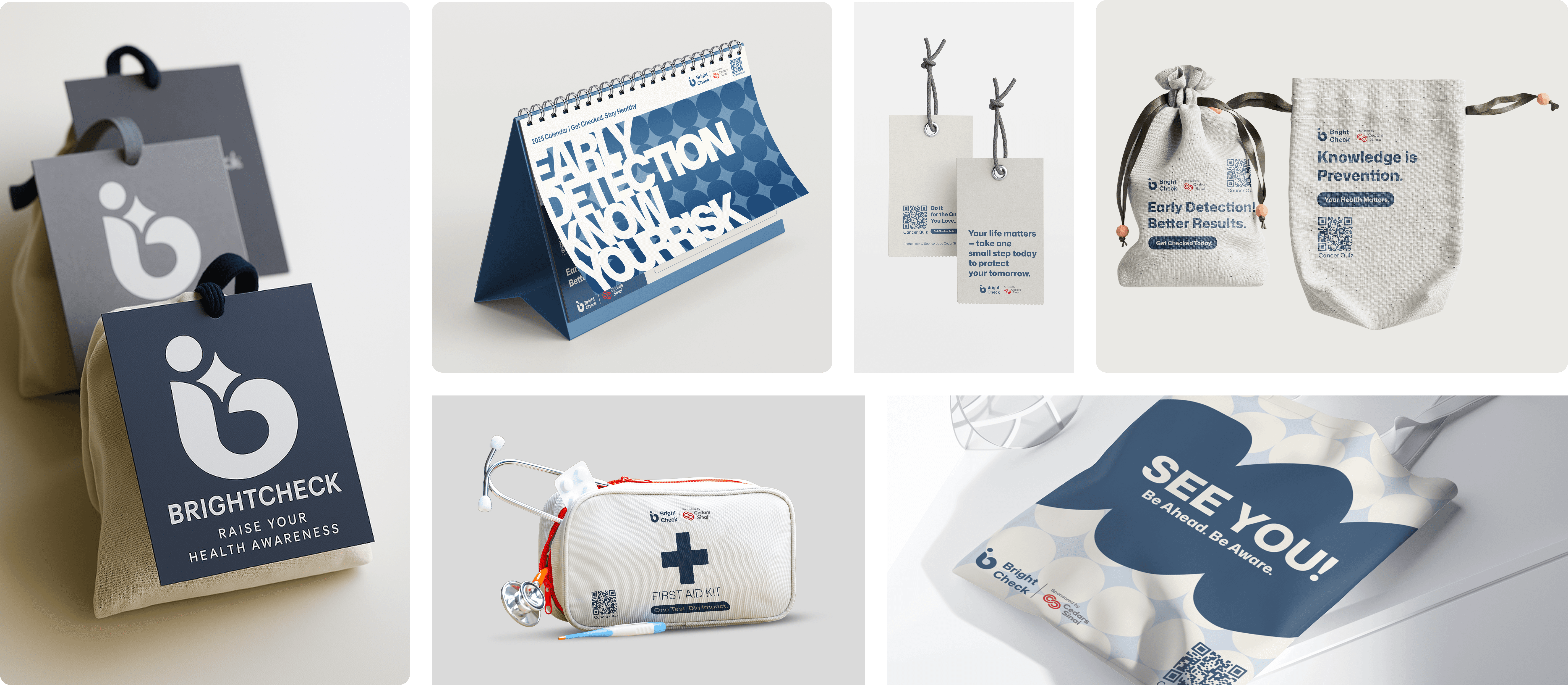
Merchandises


Entire service design outcome for CVS
My solution: Immersive cancer screening simulation web
This first-person simulation allows users to experience the cancer screening process from a patient’s perspective. It guides them through each step of the journey, helping them understand the procedure and reducing anxiety caused by unfamiliar medical processes.
Team‘s outcome: Posters/infographic, flip cards, merchandises, & 5 mins self check
Cancer in United States

In 2025,
an estimated 2 million new cases of cancer will be diagnosed in the United States
618,120 people will die from the disease.
In 2025,
An estimated 2 million new cases of cancer will be diagnosed in the United States
618,120 people will die from the disease.
In 2025,
An estimated 2 million new cases of cancer will be diagnosed in the United States 618,120 people will die from the disease.

In 2025,
An estimated 2 million new cases of cancer will be diagnosed in the United States
618,120 people will die from the disease.
In Los Angeles
88%
88%
88%
Cancer diagnoses occur in individuals aged 50 or older.
Approximately 88% of cancer diagnoses occur in individuals aged 50 or older.
55%
55%
55%
Adults in Los Angeles speak languages other than English at home.
~59%
~59%
~59%
Eligible adults are up-to-date with screenings
Further validation: Primary research insight
Growth in health consciousness
COVID-19 has triggered a lasting shift in health consciousness, with 50% of Prevent Cancer Org.'s survey participants adopting proactive health habits.
But, more barriers...
Non-English speakers, like Mandarin and Spanish speakers, are 60-70% less likely receive access on cancer care than native English speakers.
But, more barriers...
Non-English speakers, like Mandarin and Spanish speakers, are 60-70% less likely receive access on cancer care than native English speakers. Language barriers, unfamiliarity with the healthcare system, and reliance on English-speaking coordinators contribute to lower access and trust in cancer services.
Especially for elderly non-English speakers

Interview with Bartz-Altadonna Community Health Center
By researching and talking to medical professionals, we found that:
Growth in health consciousness
COVID-19 has triggered a lasting shift in health consciousness, with 50% of Prevent Cancer Org.'s survey participants adopting proactive health habits.
Non-English speakers, like Mandarin and Spanish speakers, are 60-70% less likely receive access on cancer care than native English speakers. Language barriers, unfamiliarity with the healthcare system, and reliance on English-speaking coordinators contribute to lower access and trust in cancer services.
But, more barriers...
Especially for elderly non-English speakers


Interview with Bartz-Altadonna Community Health Center
Study Insights
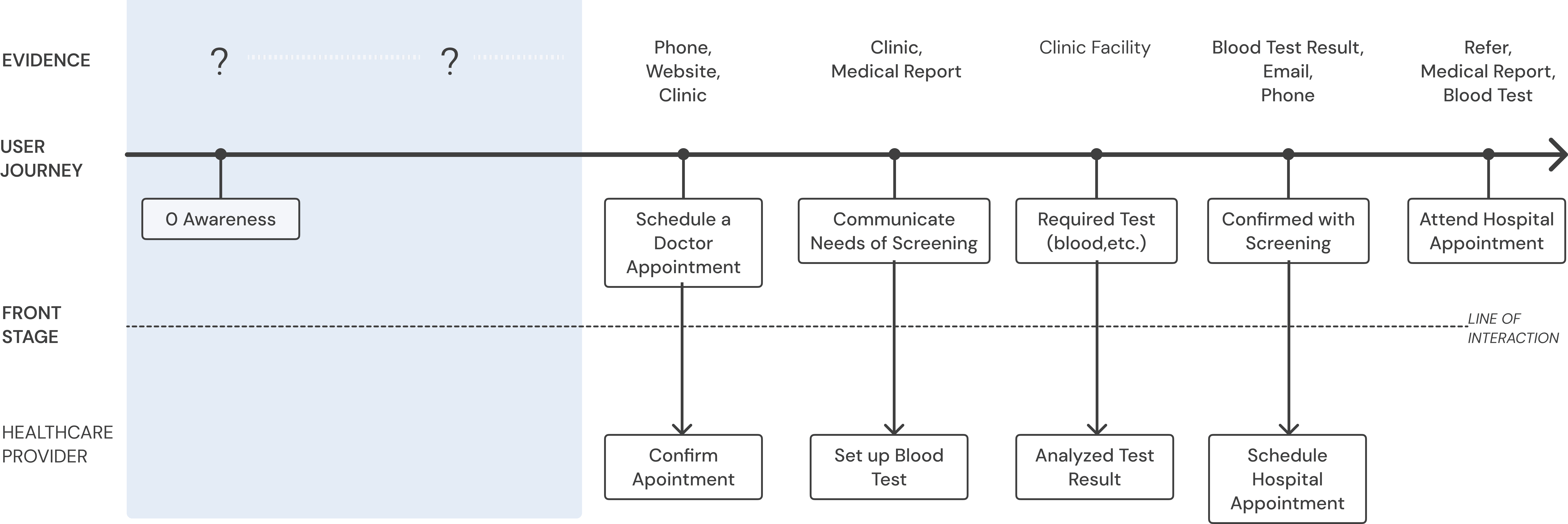
Heavily rely on doctor initiative
Cancer screening typically begins through a primary care physician or family doctor. If the physician does not actively recommend screening, the responsibility shifts to the patient to recognize the need and seek help on their own.
Lengthy process
The path to cancer screening involves multiple stages within the healthcare system. The complex process often creates barriers that discourage patients from completing or even starting screening.
Raising general audience's awareness to take the initiative and start on the right route is essential
The starting point: Korean Town
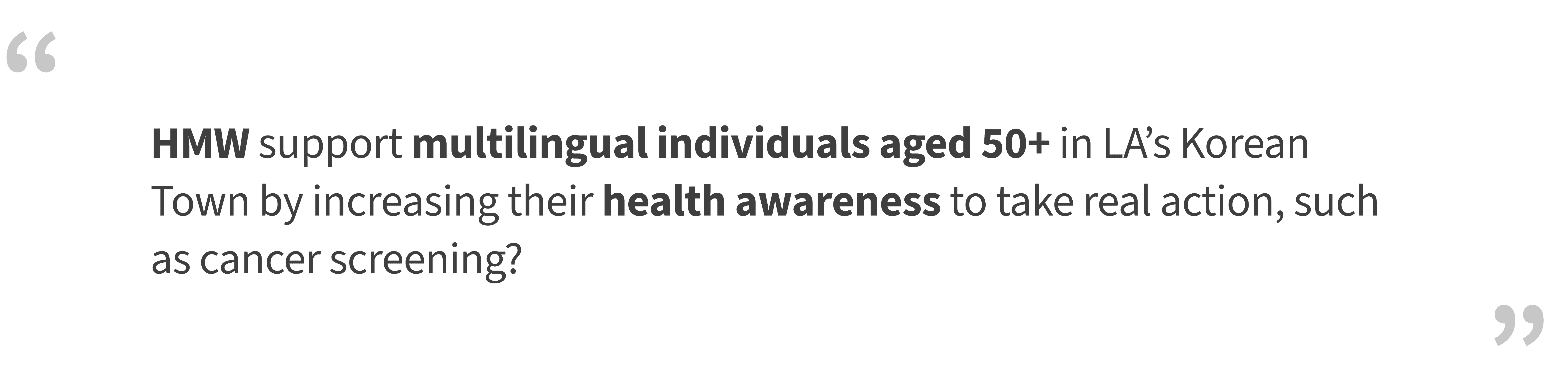
Los Angeles Koreatown is an ideal starting point. The neighborhood reflects many of the language and accessibility barriers faced by diverse populations, making it a meaningful environment to design and test solutions for multilingual healthcare access.
Research Insights

Growth in health consciousness
COVID-19 has triggered a lasting shift in health consciousness, with 50% of Prevent Cancer Org.'s survey participants adopting proactive health habits.
But, more barriers...
Non-English speakers, like Mandarin and Spanish speakers, are 60-70% less likely receive access on cancer care than native English speakers.
Especially for elderly non-English speakers
Audit study of non-English speaker's experience
Rolled played non-English speaker and reached out for help from well known hospitals in Los Angeles.
55.1% of adults in Los Angeles speak languages other than English at home.

The same response everytime
55.1% of adults in Los Angeles speak languages other than English at home.
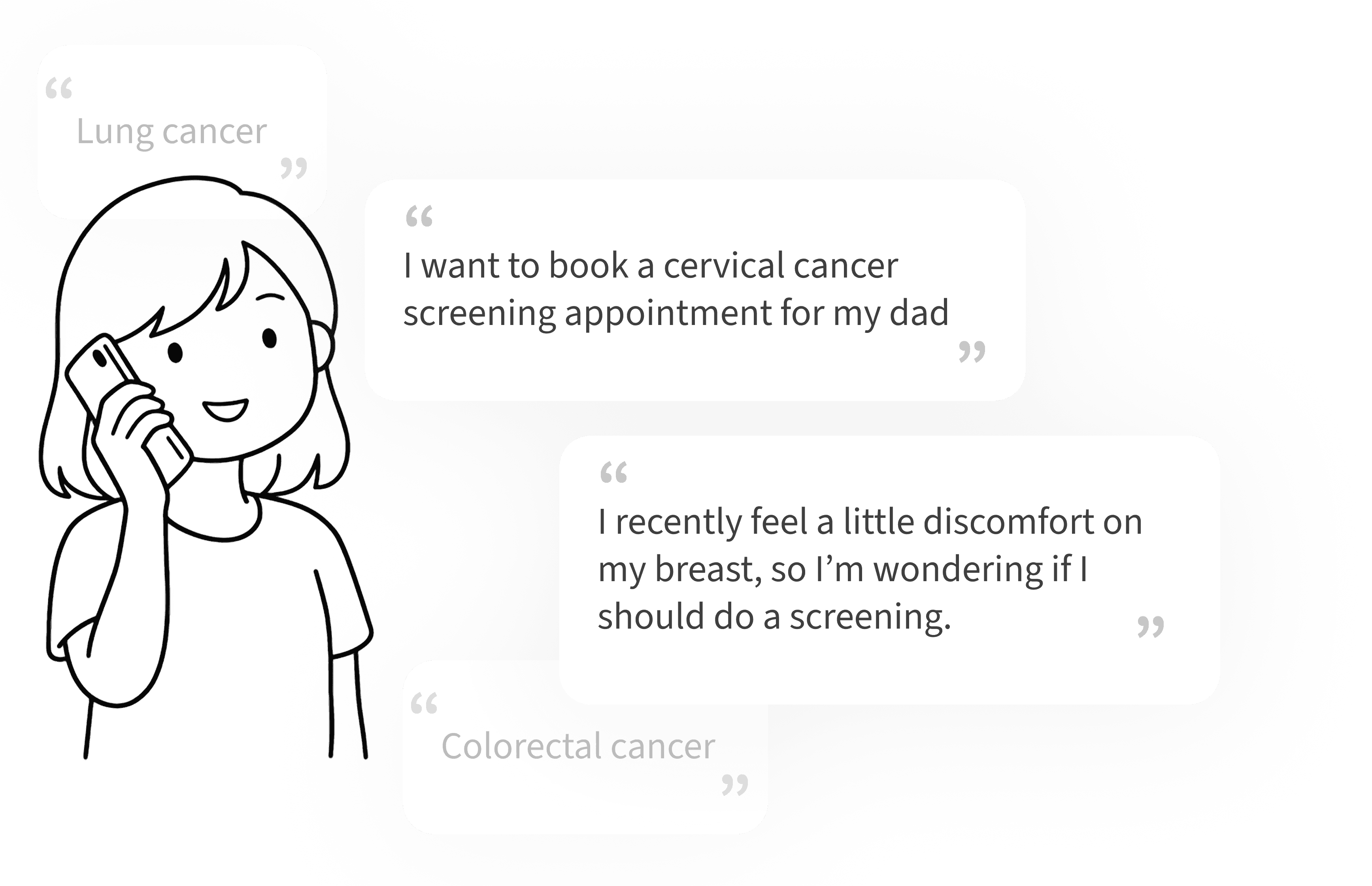
You need to schedule a doctor or family doctor’s appointment on your own and go through…
Audit Study Insights
Heavily rely on doctor initiative
Cancer screening typically begins through a primary care physician or family doctor. If the physician does not actively recommend screening, the responsibility shifts to the patient to recognize the need and seek help on their own.
Lengthy process
The path to cancer screening involves multiple stages within the healthcare system. The complex process often creates barriers that discourage patients from completing or even starting screening.
The starting point: Korean Town
Los Angeles Koreatown is an ideal starting point. The neighborhood reflects many of the language and accessibility barriers faced by diverse populations, making it a meaningful environment to design and test solutions for multilingual healthcare access.
Raising general audience's awareness to take the initiative and start on the right route is essential
Lengthy process
The path to cancer screening involves multiple stages within the healthcare system. The complex process often creates barriers that discourage patients from completing or even starting screening.
Raising general audience's awareness to take the initiative and start on the right route is essential
The starting point: Korean Town
Los Angeles Koreatown is an ideal starting point. The neighborhood reflects many of the language and accessibility barriers faced by diverse populations, making it a meaningful environment to design and test solutions for multilingual healthcare access.
Design opportunities
Exist before the appointment to increase people’s awareness and take the initiative to reach out.
55.1% of adults in Los Angeles speak languages other than English at home.

Design Goals
Limited access to accurate cancer knowledge among the general public.
The process relies heavily on the doctor taking the initiative to recommend and direct patients toward specific screening.
The process from initial awareness to completing screening is lengthy and time-consuming.


Design goals
01
Embed cancer education into people’s daily environments to normalize screening and reduce fear.
02
Enable individuals to understand their own risk and take first-step actions independently.
03
Redistribute responsibility from physicians alone to the broader service ecosystem supports users across the full journey in multiple-touch point.
Design goals
Embed cancer education into people’s daily environments to normalize screening and reduce fear.
Enable individuals to understand their own risk and take first-step actions independently.
Redistribute responsibility from physicians alone to the broader service ecosystem supports users across the full journey in multiple-touch point.
Design space exploration

Physical location
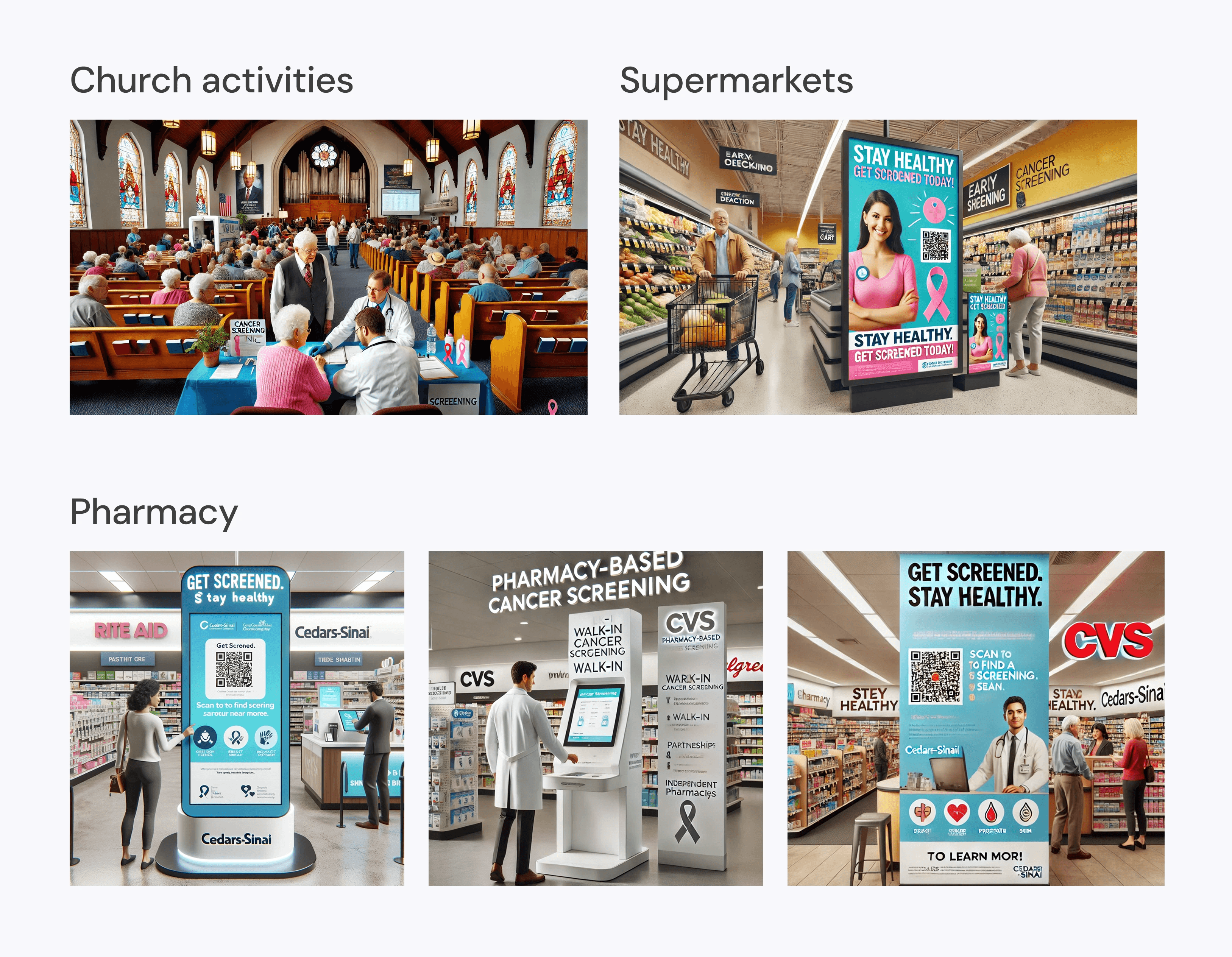
Common places where older adults spend time include supermarkets and churches. Pharmacies were selected as the starting point because they are frequently visited and already part of many elders’ routine health activities.


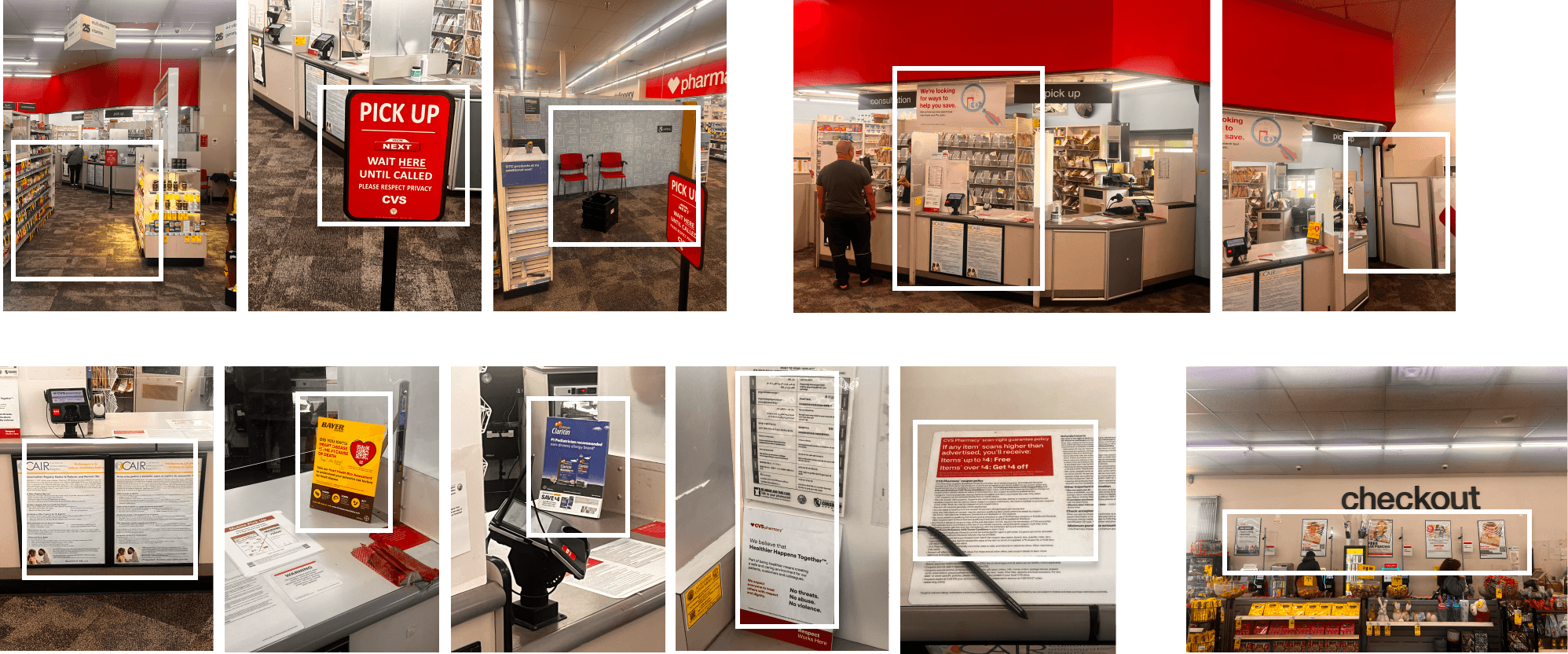
Going to the audience - CVS

CVS is a Trusted Health Touchpoint for Age 50 -80
making it a powerful space for early cancer screening awareness.
35 million
35 million
Weekly visitors
Weekly visitors
85%
85%
The U.S. population lives within 10 miles of a CVS Pharmacy
1 visit / 2 weeks
1 visit / 2 weeks
Average time visiting for age 50+
35 million
Weekly visitors
55%
The U.S. population lives within 10 miles of a CVS Pharmacy
1 visit / 2 weeks
Average time visiting for age 50+
35 million
Weekly visitors
85%
The U.S. population lives within 10 miles of a CVS Pharmacy
1 visit / 2 weeks
Average time visiting for age 50+
Touch points discovery

Early development
Digital approach
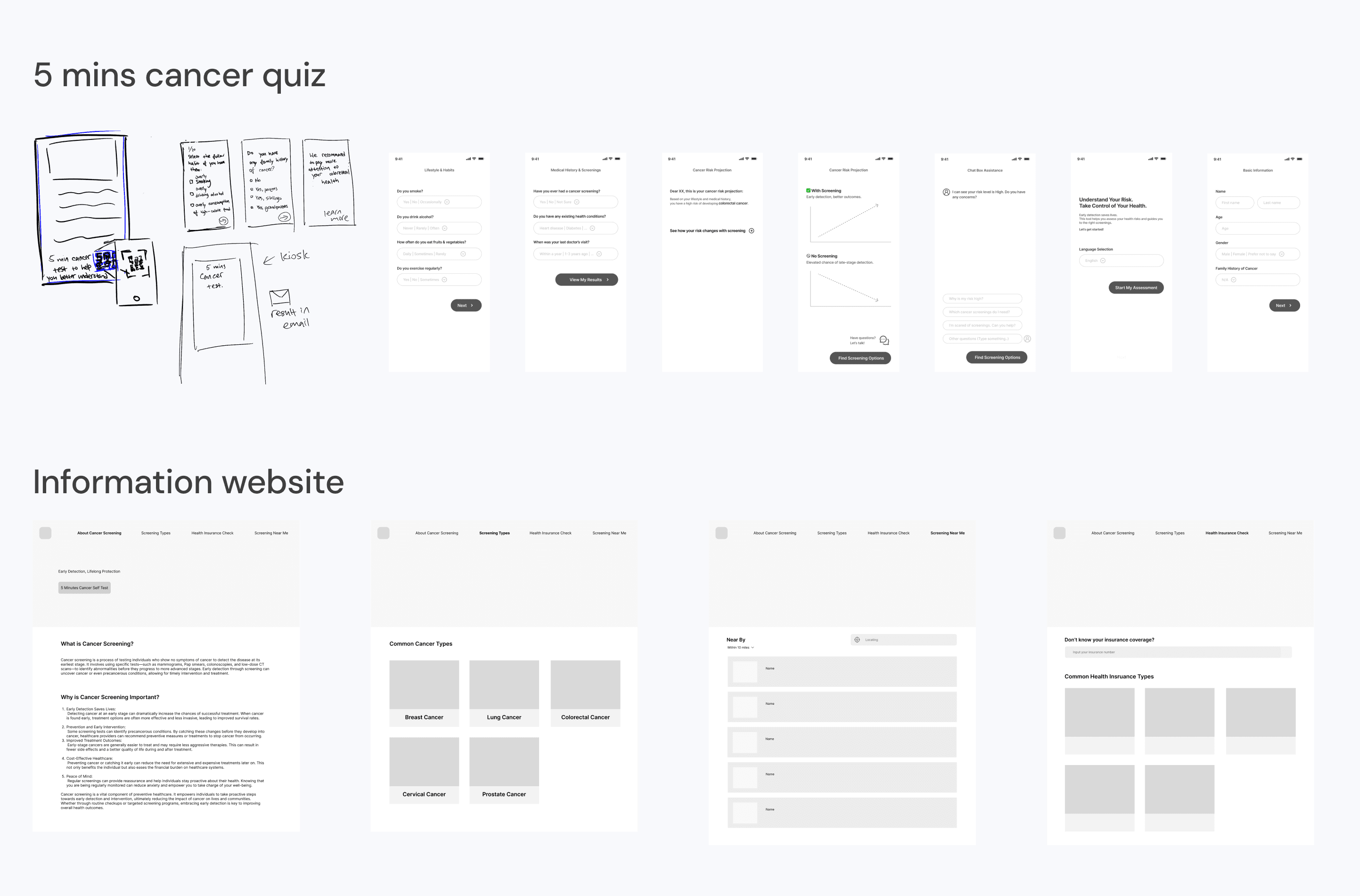
Early concepts explored placing kiosks in pharmacies where users could complete a self-check questionnaire. However, many screening questions involve sensitive personal information, and answering them on a large public screen could create discomfort and reduce participation.
Traditional cancer information websites were also considered, but text-heavy, content-based platforms often rely on users actively searching for information and can be difficult for older or multilingual audiences to navigate. These limitations led to a shift in approach.
Early concepts explored placing kiosks in pharmacies where users could complete a self-check questionnaire. However, many screening questions involve sensitive personal information, and answering them on a large public screen could create discomfort and reduce participation.
Traditional cancer information websites were also considered, but text-heavy, content-based platforms often rely on users actively searching for information and can be difficult for older or multilingual audiences to navigate. These limitations led to a shift in approach.


Merchandise & graphics

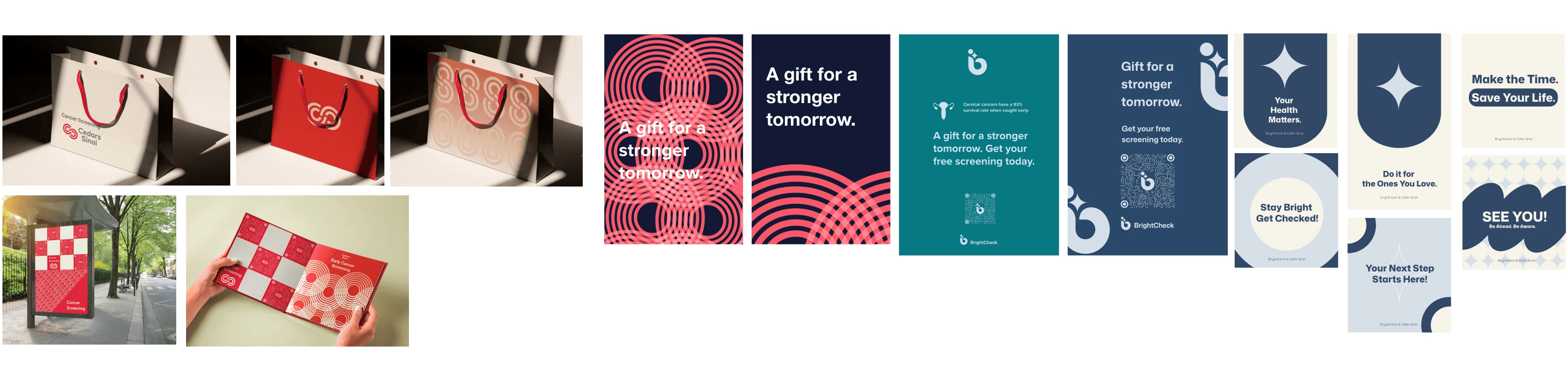
Early concepts included traditional merchandise such as bags and notebooks. The direction later shifted toward items that better fit into people’s daily routines and support different stages of the screening journey, including short-term reminders before screening and objects that encourage long-term health awareness. The visual direction also evolved from closely resembling Cedars-Sinai’s style to focusing on imagery that more clearly represents cancer screening itself.


Reflection
Through this project, I learned that improving cancer screening is not just about increasing information, but about addressing emotional and systemic barriers. Many people avoid screening because the process feels intimidating and fragmented, often relying too heavily on physician initiative.
This project strengthened my understanding of service design as a connected system rather than a single touchpoint solution. It reinforced the role of design in making healthcare more proactive, accessible, and user-centered.
Through this project, I learned that improving cancer screening is not just about increasing information, but about addressing emotional and systemic barriers. Many people avoid screening because the process feels intimidating and fragmented, often relying too heavily on physician initiative.
This project strengthened my understanding of service design as a connected system rather than a single touchpoint solution. It reinforced the role of design in making healthcare more proactive, accessible, and user-centered.